A lot of precision machining companies talk about culture in vague terms. But for professionals exploring career opportunities, and for buyers vetting suppliers, culture isn’t abstract. It determines whether a precision machine shop can truly support growth and innovation.
At Ricaurte Precision Inc., culture isn’t separate from production. It directly shapes how we hire, train, make decisions, collaborate, and deliver results for our customers.
A growth-focused culture enables better outcomes
A culture built around growth gives people permission to learn, experiment, collaborate, and take ownership. That mindset shows up in how work gets done on the shop floor.
When machinists and programmers feel empowered, they push processes forward instead of maintaining the status quo. Smarter programming strategies, process improvements, improved cycle times, and more consistent workflows come from teams that are encouraged to think critically and push boundaries.
An innovative manufacturing company invests in its people
We consistently see two types of professionals thrive in RPI’s environment:
- Early-career machinists, engineers, and programmers eager to build real shop-floor experience in a forward-thinking, fast-moving environment
- Skilled professionals who feel stagnant at their current place of employment and want to work at a precision machining company that is on the cutting edge.
While we are always looking for expertise, RPI doesn’t just hire for skill; we hire for trajectory. Training, exposure to advanced equipment, and cross-department collaboration are built into daily workflows.
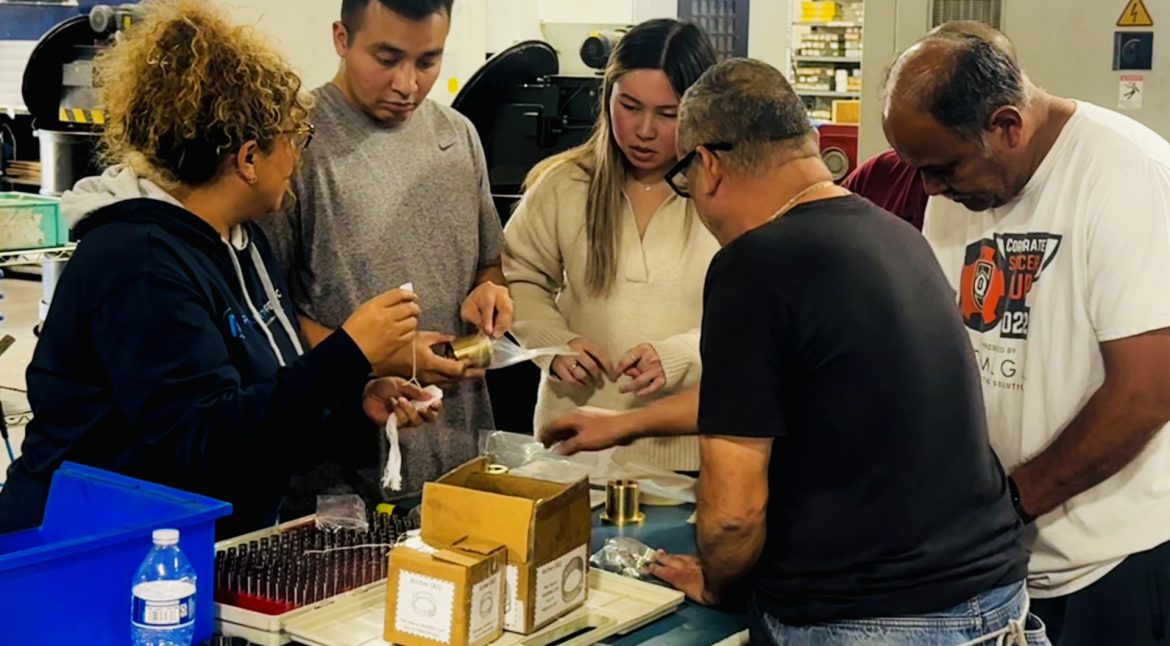
For instance, when a programmer at RPI learns advanced multi-axis strategies, that knowledge doesn’t stay siloed. Machining, engineering, quality, and programming teams come together to accelerate collective capability.
Our people don’t feel locked into one singular path. They’re encouraged to expand their skills or explore adjacent roles. The sky’s the limit at RPI.
Ownership and transparency matter on the shop floor
Manufacturing growth happens when teams are trusted to responsibly test limits. We encourage machinists to push processes safely, even if that means breaking a tool along the way. Controlled experimentation is how new efficiencies are discovered.
Other ways people at RPI take ownership of their improvement include:
- Operators optimizing feeds and speeds with engineering input
- Programmers refining cycle times based on machine feedback
Transparency reinforces our team’s sense of ownership. Our people have visibility into company-wide metrics, helping them understand how their decisions influence broader outcomes.
Team alignment improves manufacturing performance
Growth isn’t determined on a departmental level; it’s measured collectively. Teams develop SMART goals that interconnect, ensuring progress in one area supports the entire organization.
When quality, engineering, programming, and machining teams align around throughput goals, improvements happen in sync. This shared ownership creates smoother workflows and more predictable outcomes.
Leadership plays a significant role in sustaining culture
At RPI, culture starts at the top with forward-thinking leaders who truly care about their teams and each individual’s contributions. Our President, Hernan Ricaurte, actively supports training and upward mobility, including:
- Career progression within departments
- Lateral moves to develop new skill sets
- Investment in long-term professional growth
This culture matters to our customer base
A growth-focused culture benefits our customers just as much as our internal teams through:
- Constantly improving processes
- Faster adaptation to new challenges and complexities
- Greater consistency
- Stable production without bottlenecks
When our people grow, the entire operation grows with them, and our customers feel the difference.
Ready to partner with a precision machining company built on growth and accountability? Request a quote to get started.