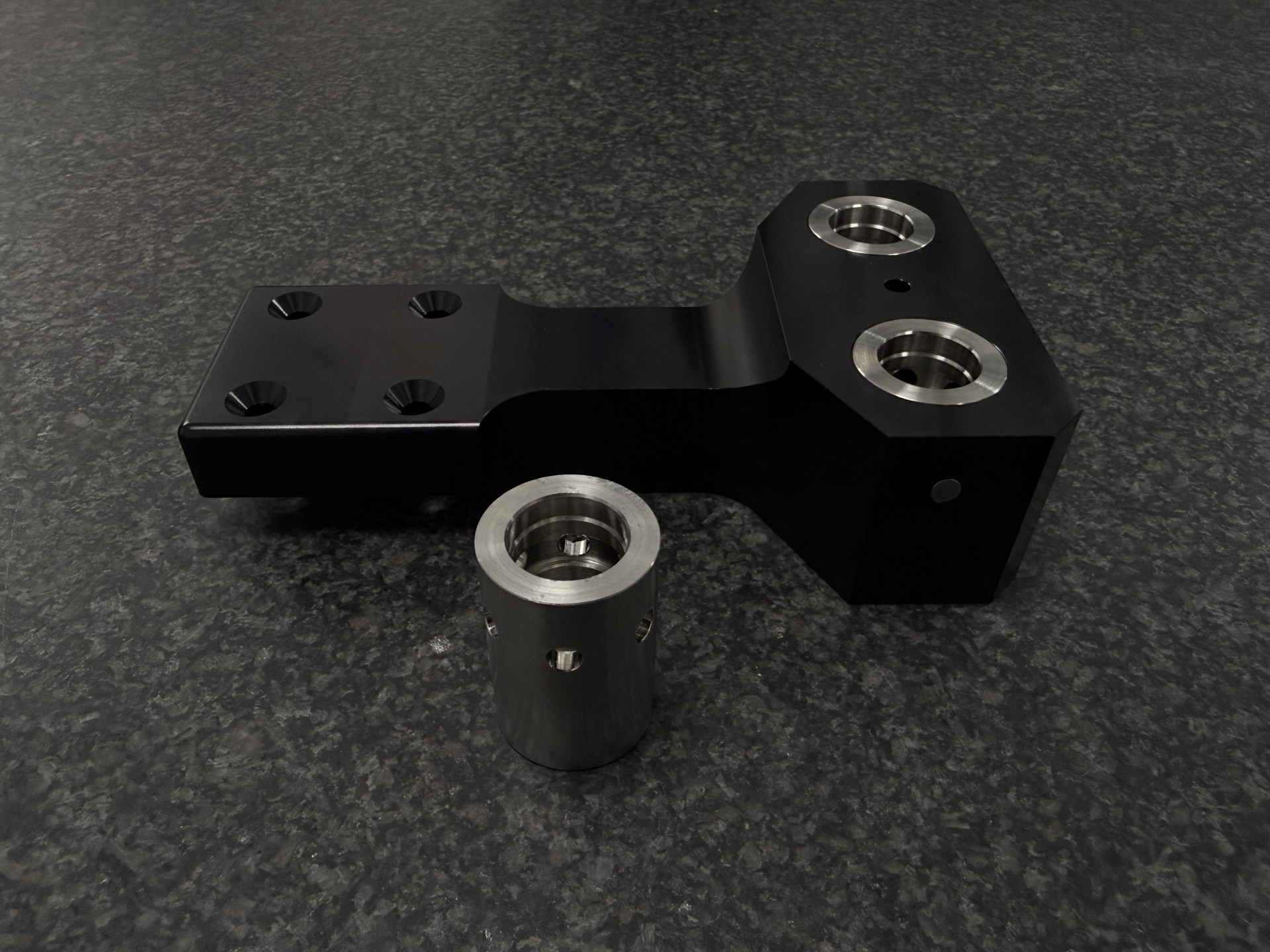
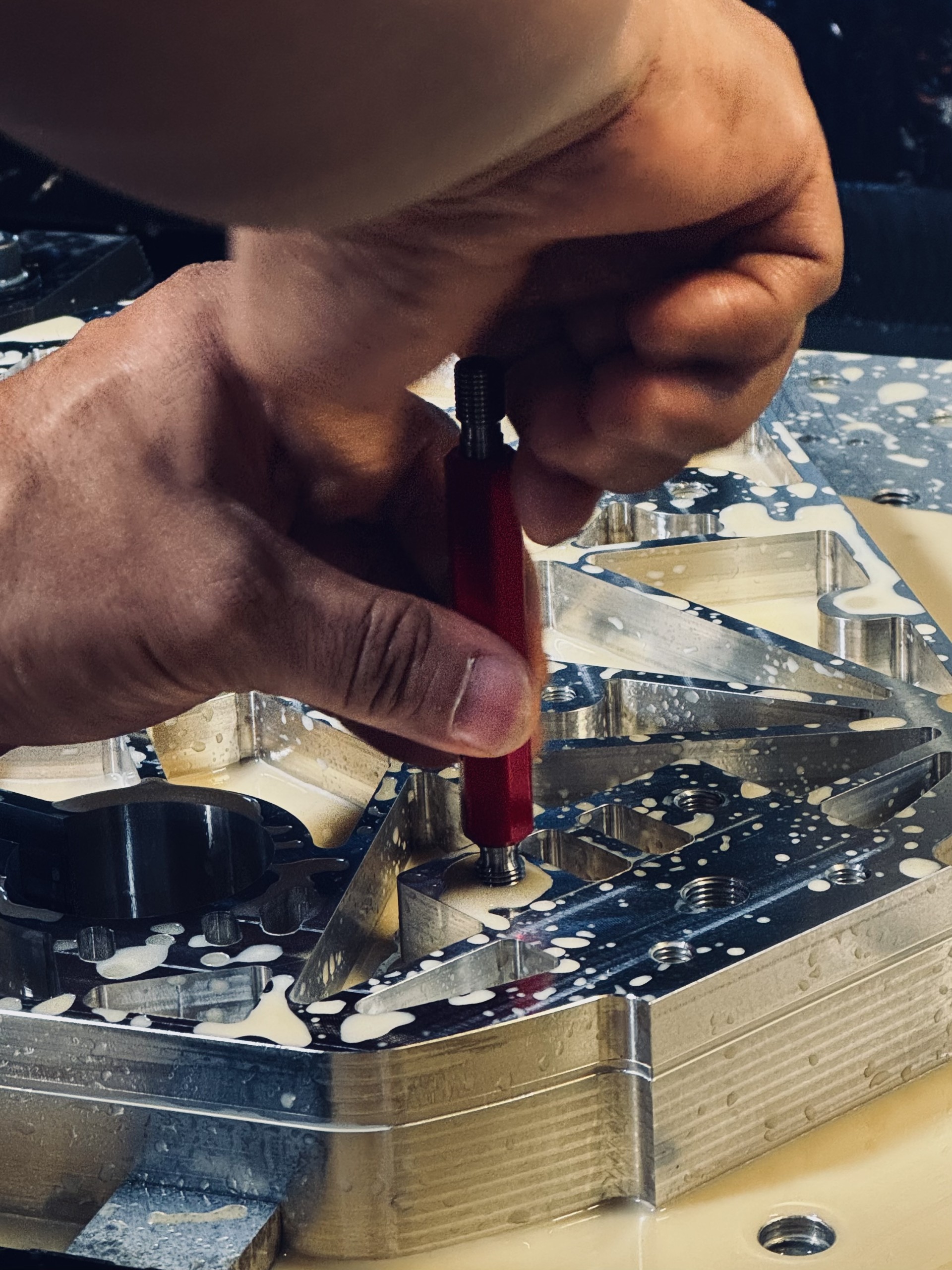
As a trusted precision machining company serving industries from aerospace to medical, Ricaurte Precision Inc. (RPI) works closely with engineers and designers to turn drawings and models into tangible components. In a recent article, we shared general design-for-manufacturability (DFM) tips to help reduce cost, improve lead times, and eliminate preventable rework. In this follow-up, we are focusing on something just as critical: tooling considerations.
From minimizing tool wear to reducing setup time, design decisions that consider tooling from the start are crucial in preventing costly and time-consuming rework down the line and getting the best results from your contract manufacturer.
Why Tooling Matters in Precision Machining
Tooling isn’t just about cutters and inserts; it’s about how our team translates your print into a finished product. And as any experienced precision machining company will tell you, the right design choices will simplify operations and reduce lead times and costs.
1. Standardize Whenever Possible, with Common Drill Sizes and Tolerances
Selecting standard tooling and loosening non-critical tolerances where possible is one of the easiest ways to increase throughput and reduce tool wear. Tight tolerances and non-standard dimensions not only increase programming and inspection time, but also require slower feeds and speeds, which drive up cost.
At RPI, our team may opt for advanced machines, such as our 5-axis machining centers, to access complex features. However, if a part could have been produced using standard tooling on a simpler setup, we recommend going this route to avoid incurring additional time and cost.
2. Minimize Tool Changes with Smart Feature Grouping
Tool changes can hinder productivity, especially during lights-out manufacturing or high-volume runs. When engineers group similar features together using standard-sized tools, our programmers can create more streamlined operations, leading to faster cycle times and more consistent parts.
Even better, standard tools come with known speeds, feeds, and wear profiles. That means fewer unknowns, especially when producing components that require extreme precision or exotic materials.
3. Design with Tool Access in Mind, Watching Out for Deep Pockets, Hidden Geometries, and Limited Reach
One red flag we occasionally see during print reviews is inaccessible geometry, such as deep pockets, buried holes, or non-standard features that require long-reach tools or multiple setups. These designs can drastically increase machining time and the risk of error.
For example, machined castings or complex manifolds with deep or narrow cavities may look good on paper, but they require more operations and specialized tooling to machine. Designs that limit access often require custom fixturing or switching from a standard 3-axis to a 5-axis setup just to reach critical features.
To avoid these complications, aim to identify and eliminate limited-access features early in the design phase if possible, while maintaining the part’s full functionality.
4. Choose Chamfers Over Fillets to Save Time, Money, and Headaches
In many cases, chamfers are far easier to machine than fillets. They can be cut in a single pass with standard tools, increase tool life, simplify deburring processes, and speed up inspection. On the other hand, fillets often require ball-end mills, slower feeds, and longer inspection times.
Unless your component requires fatigue resistance, stress relief, or particular aesthetics, opting for chamfers is usually a smart way to optimize your design.
5. Avoid Intersecting Threads or Cross Holes
Intersecting features like cross holes and overlapping threads complicate tool paths and make inspection processes more challenging. These designs often require additional machining steps, angled setups, or even wire EDM services, which all increase cost. If they’re not essential to the part’s function, we recommend adjusting the geometry for less complicated machining processes.
Looking for the Best Results? Collaborate Early in the Process
As a trusted California machine shop serving highly regulated industries, RPI sees a wide range of part designs, and we’re always happy to collaborate.
The best time to think about tooling is before you submit an RFQ. Reviewing designs with your manufacturer early ensures that your design supports efficient, cost-effective machining from day one, so parts are built for manufacturability.
If you’re looking to partner with a precision machining company that prioritizes process optimization and open communication, contact RPI to learn how we can support your project with quality, precision, and speed.