It’s common for manufacturers to source related components from multiple suppliers. Unfortunately, this approach often introduces unnecessary complexity once production begins.
When a precision machining partner manufactures an entire part family or both sides of mating components, they unlock knowledge that isn’t available when every part is treated as an independent project. Planning becomes more strategic, machining becomes more efficient, and quality improves when every component is considered within the larger assembly.
Let’s dive into what that looks like in practice at Ricaurte Precision.
Strategic Planning Creates Long-Term Value
Significant work must take place behind the scenes long before parts touch machines. Programming, tool selection, fixture design, machine selection, inspection planning, and process validation all require collaboration between engineering, production, and quality teams. This upfront planning represents a major investment in any machining project.
When customers trust one supplier with an entire family of parts, much of this work can be leveraged across multiple components instead of being recreated for every individual part. Rather than starting over with each drawing, the process continues to improve.
Consolidating Part Families Leads to Efficiencies
Similar Materials Mean Smarter Tooling
Many part families share common materials, similar geometries, thread sizes, or machining features. Because of these similarities, the same tooling strategies can often be reused across multiple parts. Instead of tearing down one setup and building another from scratch, machinists can continue running similar components with minimal interruption.
By leveraging fewer setups, our team can optimize for greater machine utilization, more consistency in our machining processes, and overall greater speed in production.
Strategically Planning Material Purchases
Consolidating related work also creates advantages in purchasing. Instead of sourcing material separately for every component, manufacturers can often purchase larger quantities of the same stock material at one time. This becomes especially valuable when material pricing fluctuates due to market conditions or tariffs.
Looking at the entire product family instead of individual components helps optimize both production planning and purchasing decisions.
DFM Opportunities Increase Across Entire Part Families
Because our engineers understand how each component relates to the others, our team can recommend improvements that may not be obvious when reviewing individual drawings.
Those conversations often include topics such as:
- Shared machining strategies: Similar geometries may allow multiple parts to be produced using comparable tooling, fixtures, or machining approaches.
- Simpler setups: Sometimes a small design adjustment allows multiple components to share similar workholding strategies.
- Efficiencies during production: Our team can recommend whether a component is better suited for certain processes based on how the complete family will be produced.
The earlier these discussions happen, the more opportunities exist to increase efficiency and reduce manufacturing costs.
It’s Beneficial to Manufacture Mating Parts Together
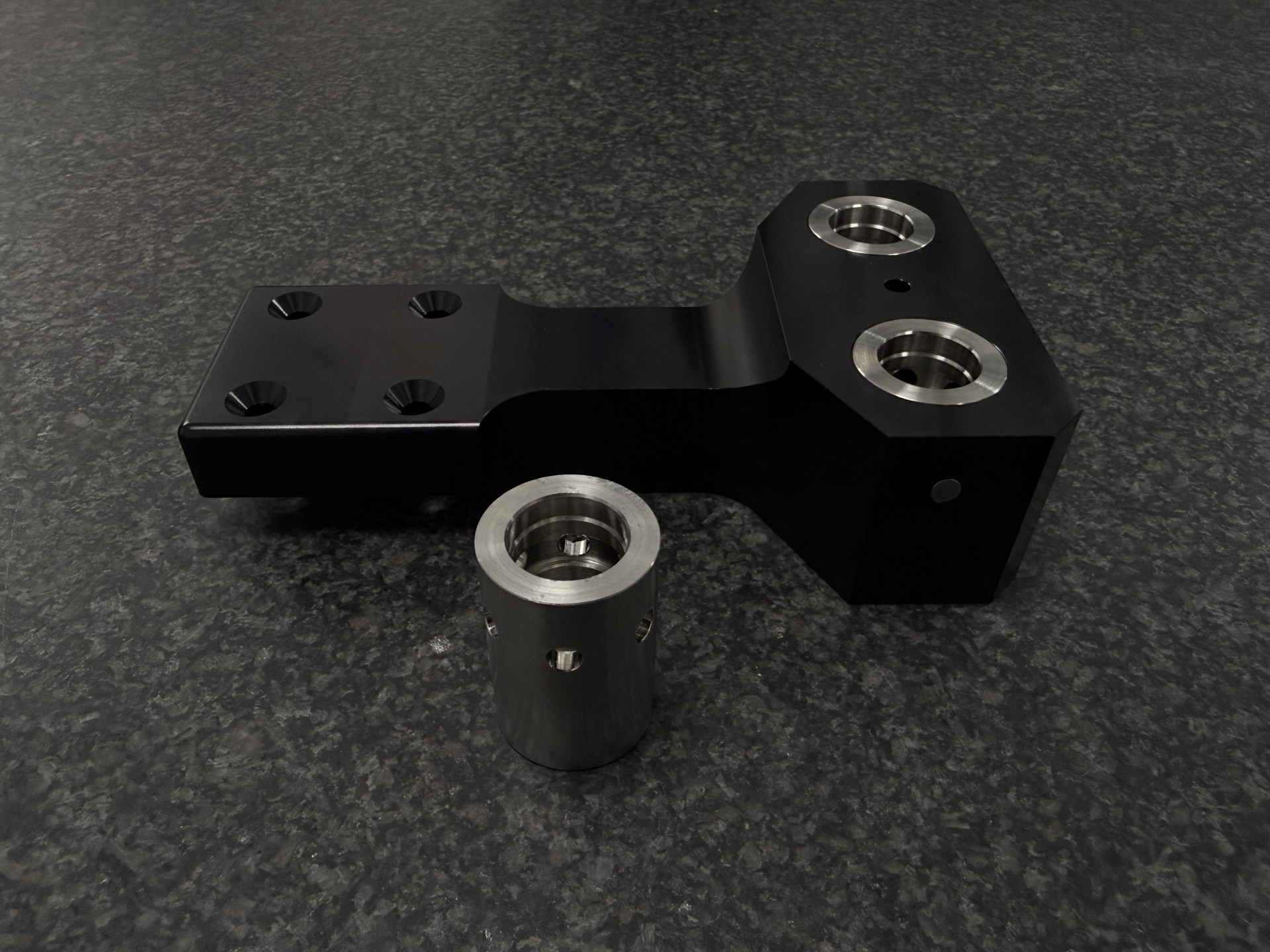
Assigning mating components to the same precision machining company often leads to improved fit and function.
When multiple suppliers manufacture components that must be assembled together, they only see part of the equation. This can introduce problems associated with tolerance stacking. Even when every manufacturer produces parts within print specifications, slight dimensional variations on both components can create assembly issues once they come together.
When the same machining partner produces both mating parts, those relationships are understood from the start. Instead of focusing on one component at a time, the manufacturing strategy considers how the finished parts will ultimately function together.
Build Better Programs by Keeping Related Parts Together
Manufacturing related components with the same precision machining partner creates advantages that extend far beyond production efficiency.
When mating parts are produced by different suppliers, each company focuses only on its individual component. Even if every part meets print specifications, small dimensional variations between suppliers can introduce tolerance stack-up issues that affect assembly and overall performance. Producing mating parts together allows one team to consider how every component functions within the finished assembly, not just how it performs individually.
If you’re currently sourcing related components from multiple suppliers, it may be time to evaluate what you’re leaving on the table. Consolidating your mating parts and part families with RPI can simplify your supply chain and improve quality, consistency, and long-term manufacturing efficiency.
Request a quote to get started on your next project.